For landowners
If you have ground sitting idle, here is what we would do with it.
Not a farm, not acreage. A large backyard, a spare side lot, or an unused corner of a bigger parcel is usually more than enough. This page answers the question you would reasonably ask first: what happens to my property?
Concept stage, reviving in 2026. We are not licensed yet and not selling yet. We are not asking anyone to commit ground today. This is an introduction, not a proposal.
How much space it actually takes
Less than people expect. We grow three things: cucumbers, garlic and bay leaf. The salt we buy. Here is the space it takes to make one person a full-time living, drawn against a single acre.
The full bar is one acre, 43,560 sq ft
The last row is the worst case we could come up with, at the most we would ever aim to earn. Even that fits inside the one-acre Fallbrook lease we already built on in 2013, with more than half the acre left over. These are planning estimates rather than promises, and we are glad to walk anyone through the assumptions behind them who wants to see the arithmetic.
Why you can trust us not to wreck it
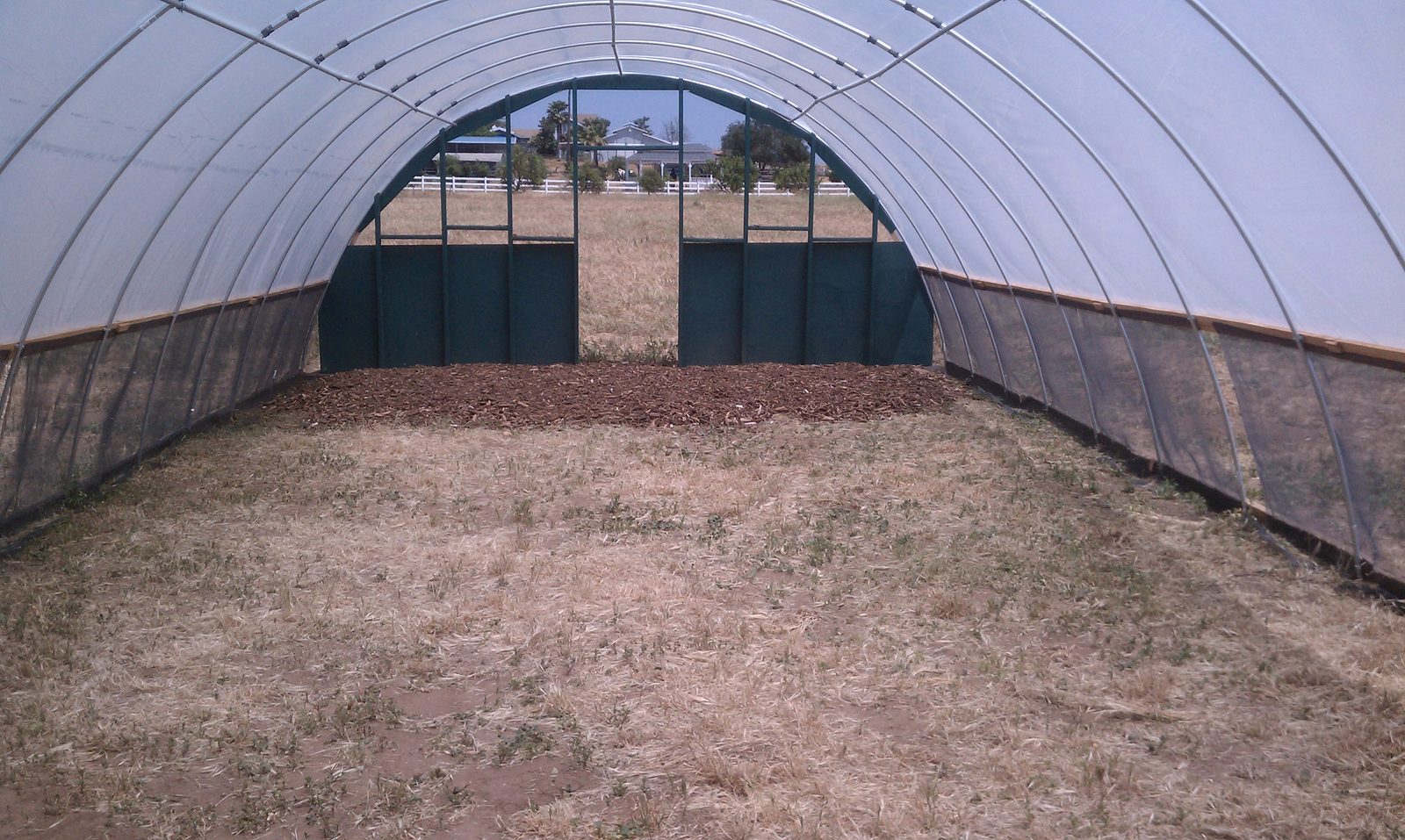
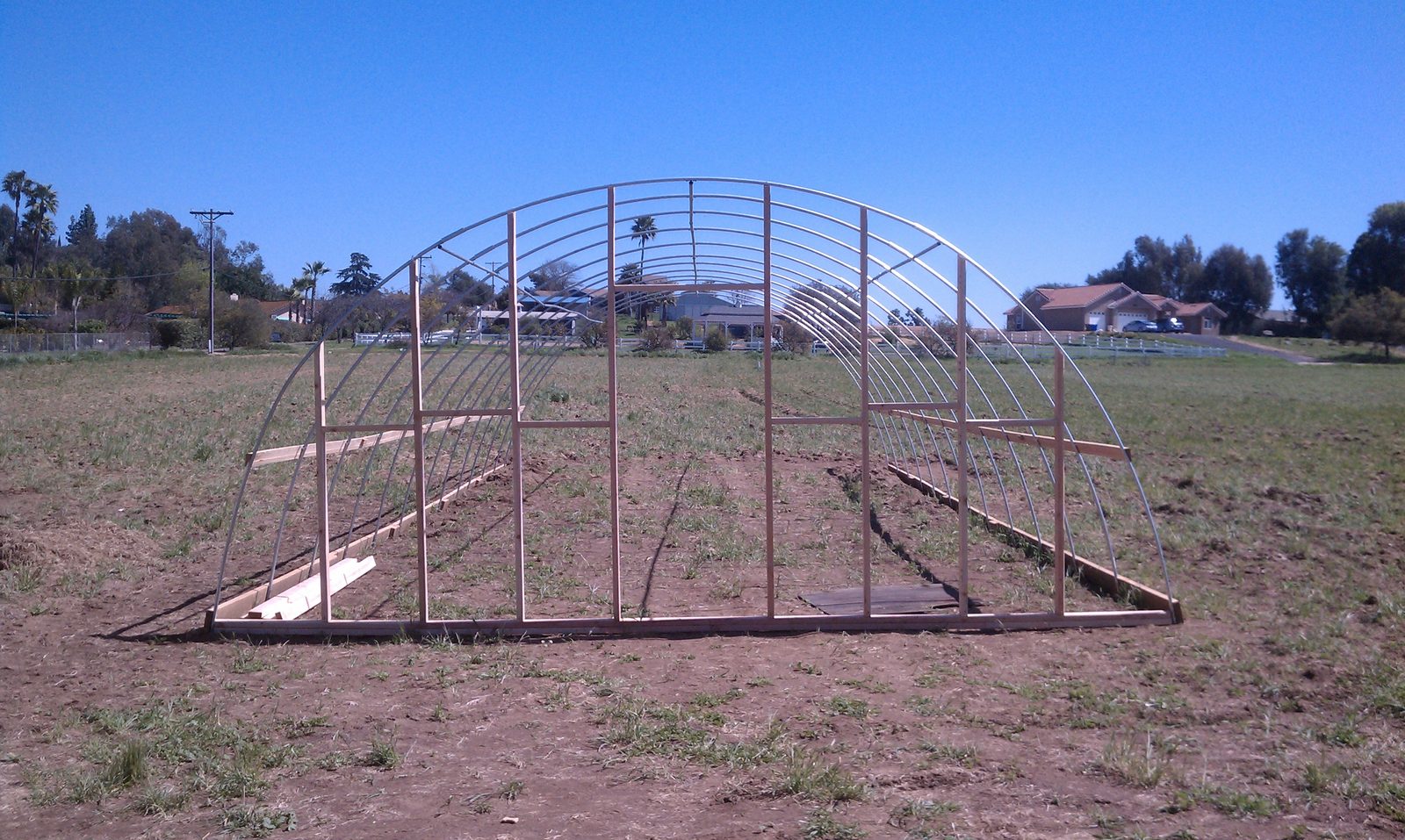
The honest answer is not a promise, it is a record. In 2013 we leased an acre in Fallbrook and spent nine months building on it. More useful than that: we can show you the sums we did before we started.
-
We worked out the rainwater before we put the building up.
Roof area, local rainfall, gallons per inch of rain, tank size. We knew a hoop house roof would catch about ten thousand gallons a year at Fallbrook's sixteen inches of rain, before there was a roof there to catch any.
-
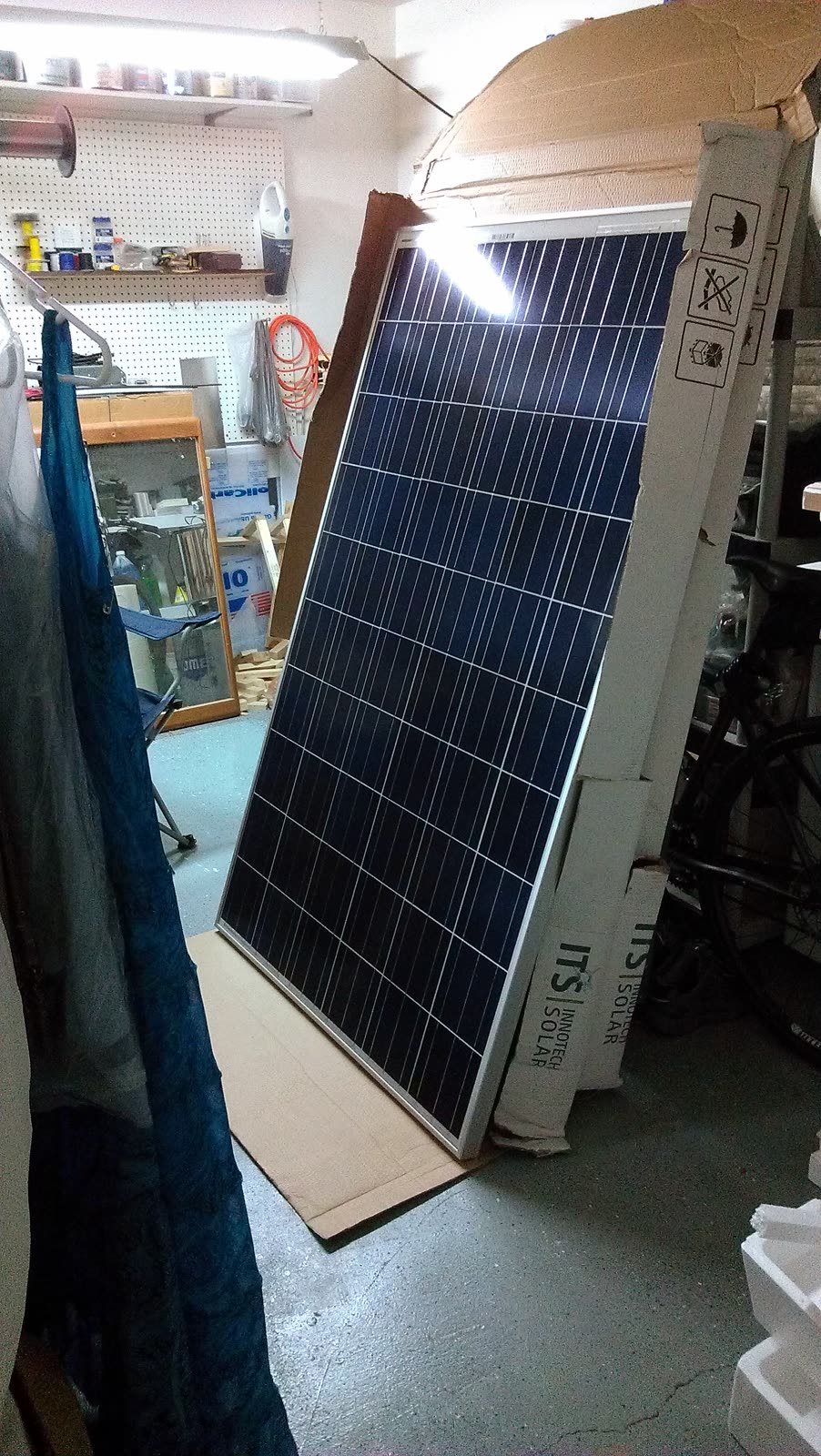
We priced the solar before we bought any of it.
What the pump draws, watt-hours a day, panel wattage, battery bank, itemized down to a $1,400 parts total. We did not order a single part until the whole thing balanced on paper.
-
We sized the pump before we cut any pipe.
How deep the pipe sits, how much air goes in per gallon of water, and the flow rate we wanted, all worked out against published engineering references and a peer-reviewed design equation, and all settled before anything got built.
-
We compared three ways of building it before picking one.
Metal tubing, PVC over rebar, and a commercial bender kit. We chose on the evidence, not on whichever guide we happened to find first.
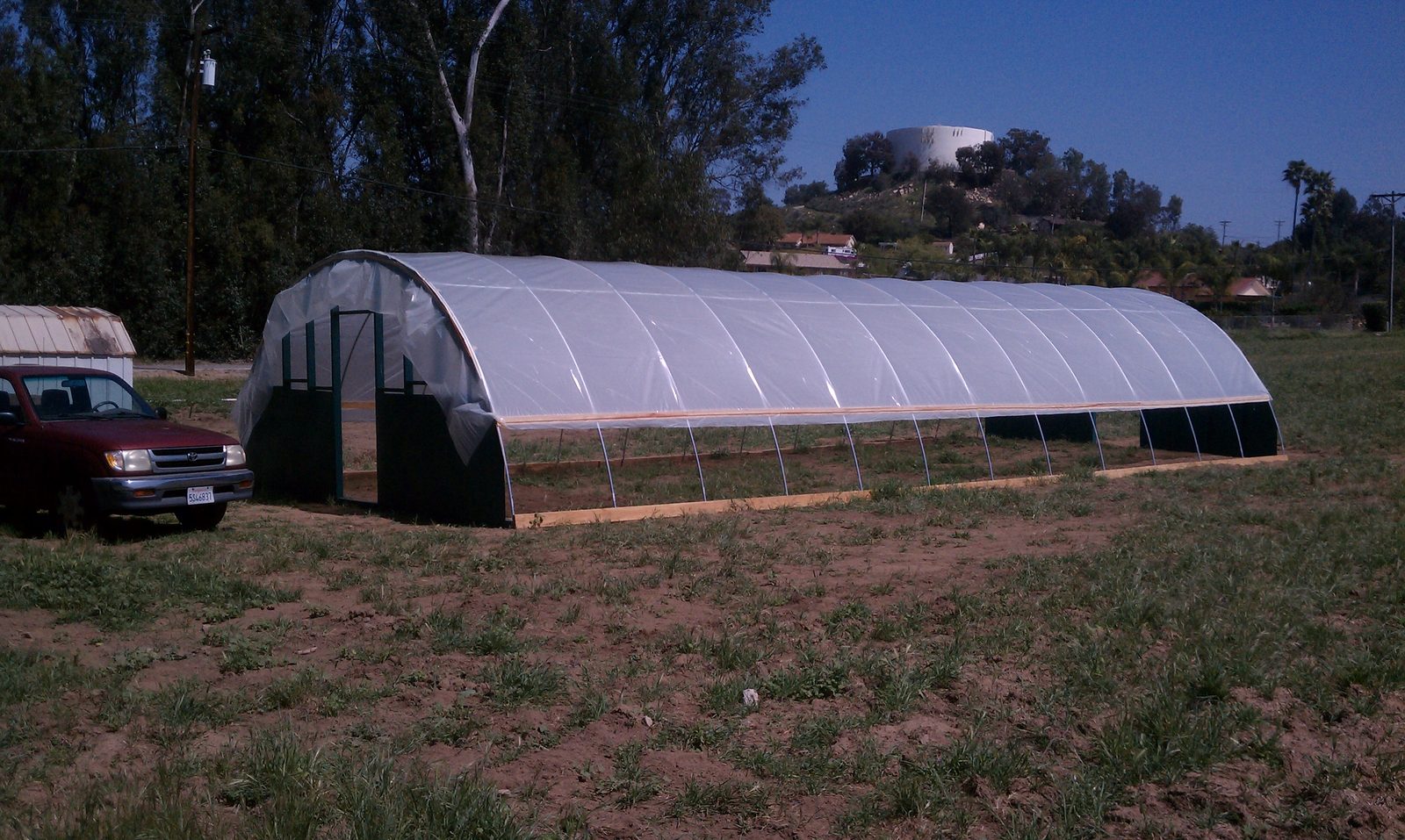
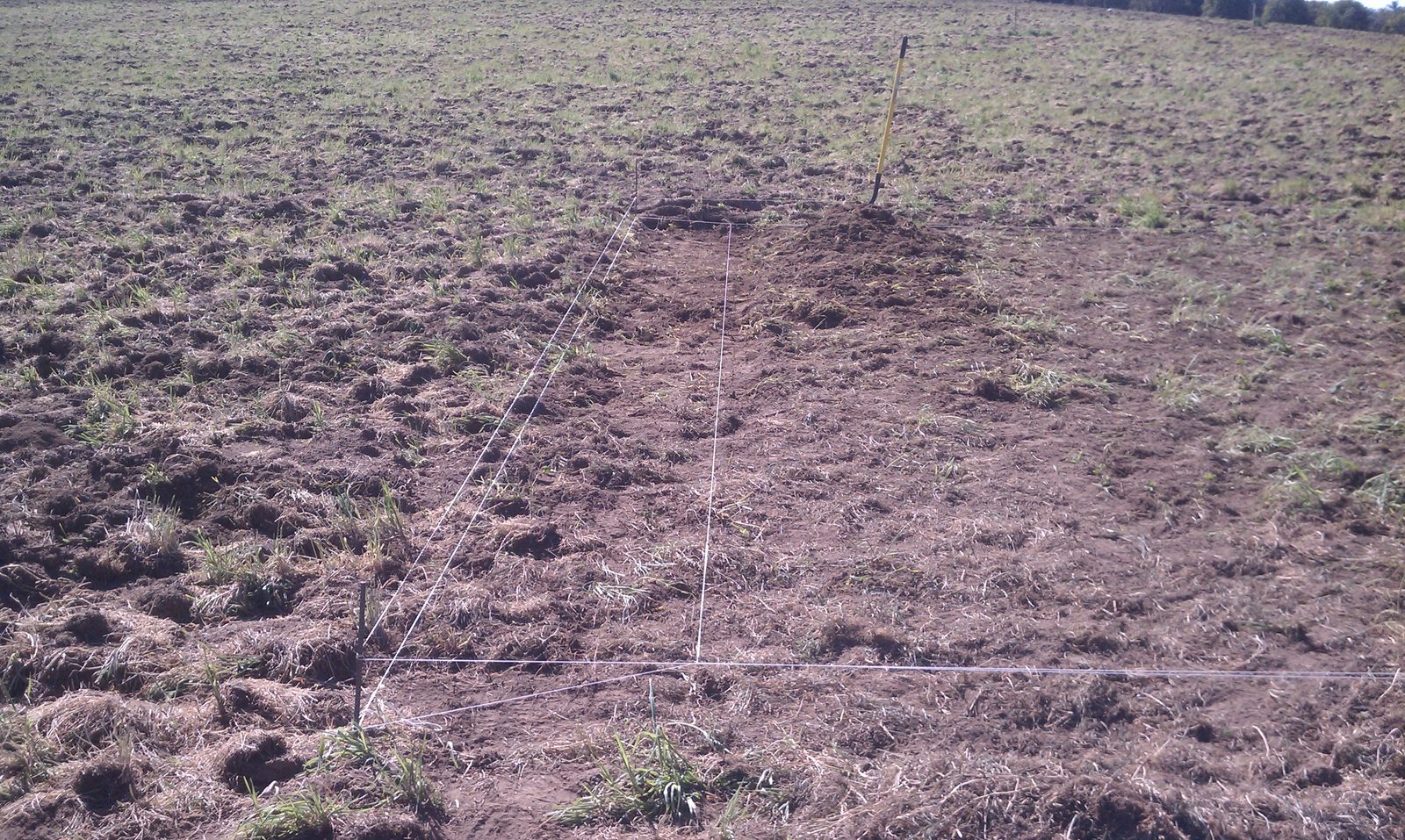
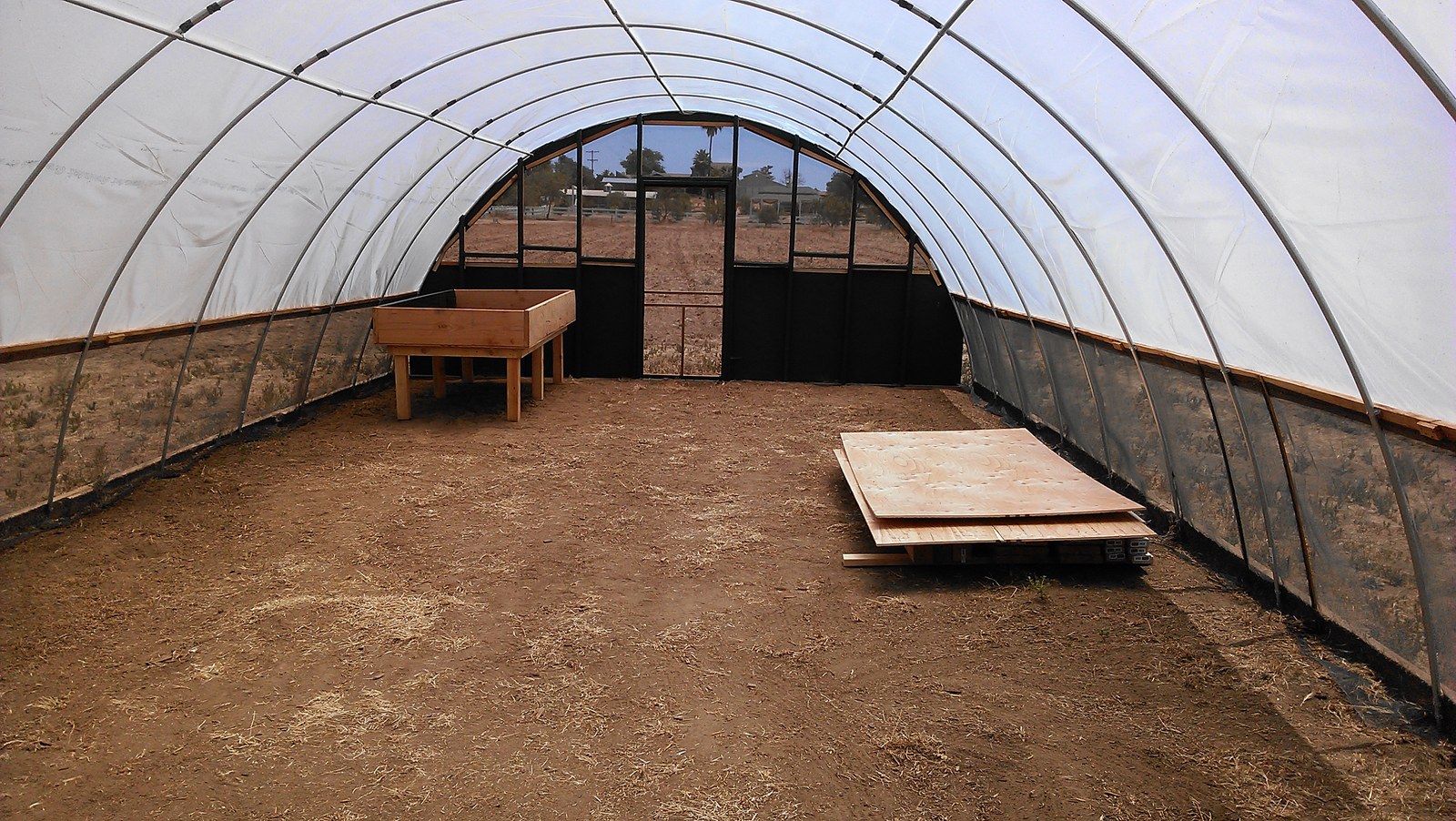
The solar went the same way. We priced the whole system on paper first, down to the panel wattage and the battery bank, and only then ordered the panels and put them up on the acre.
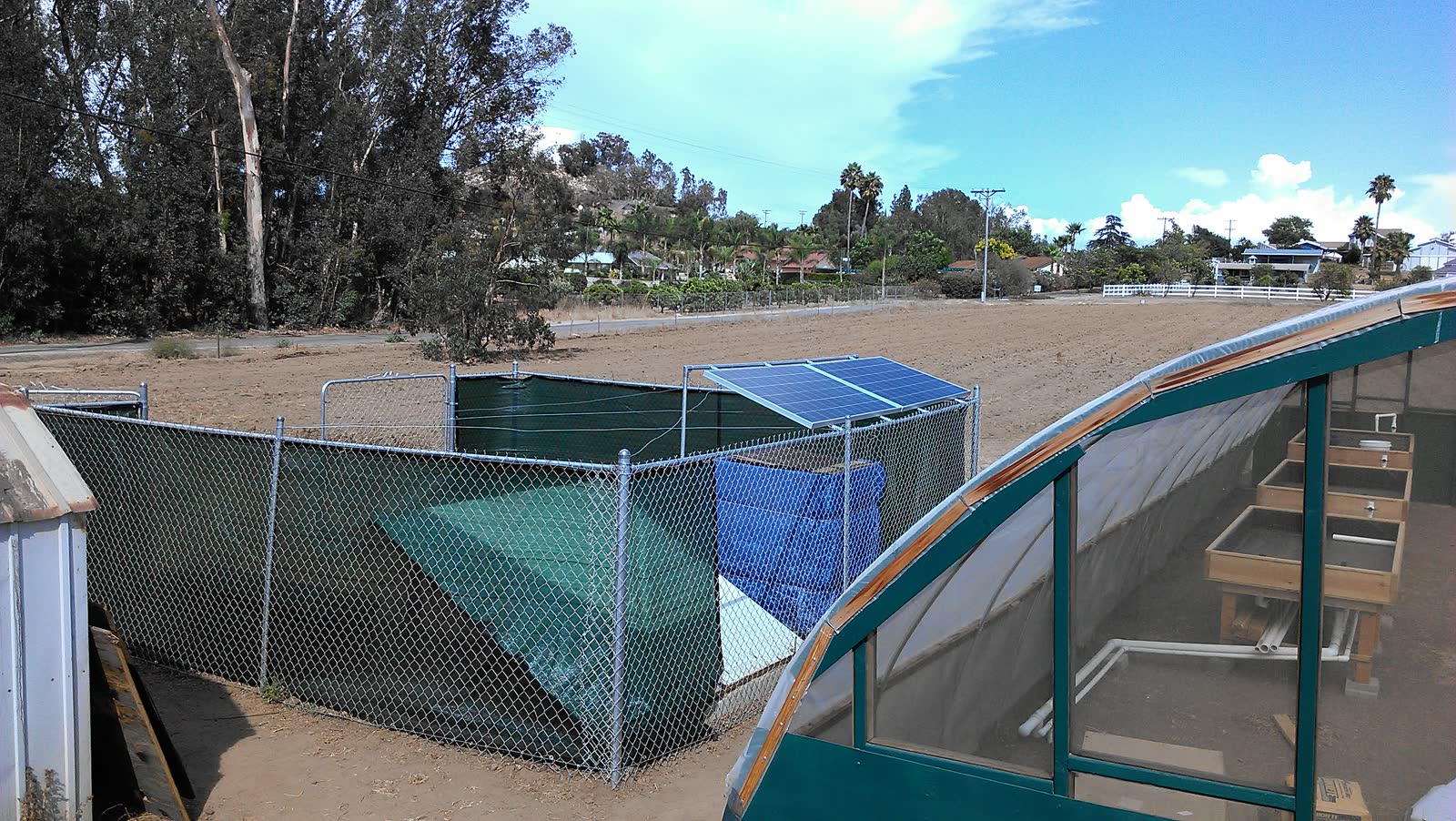
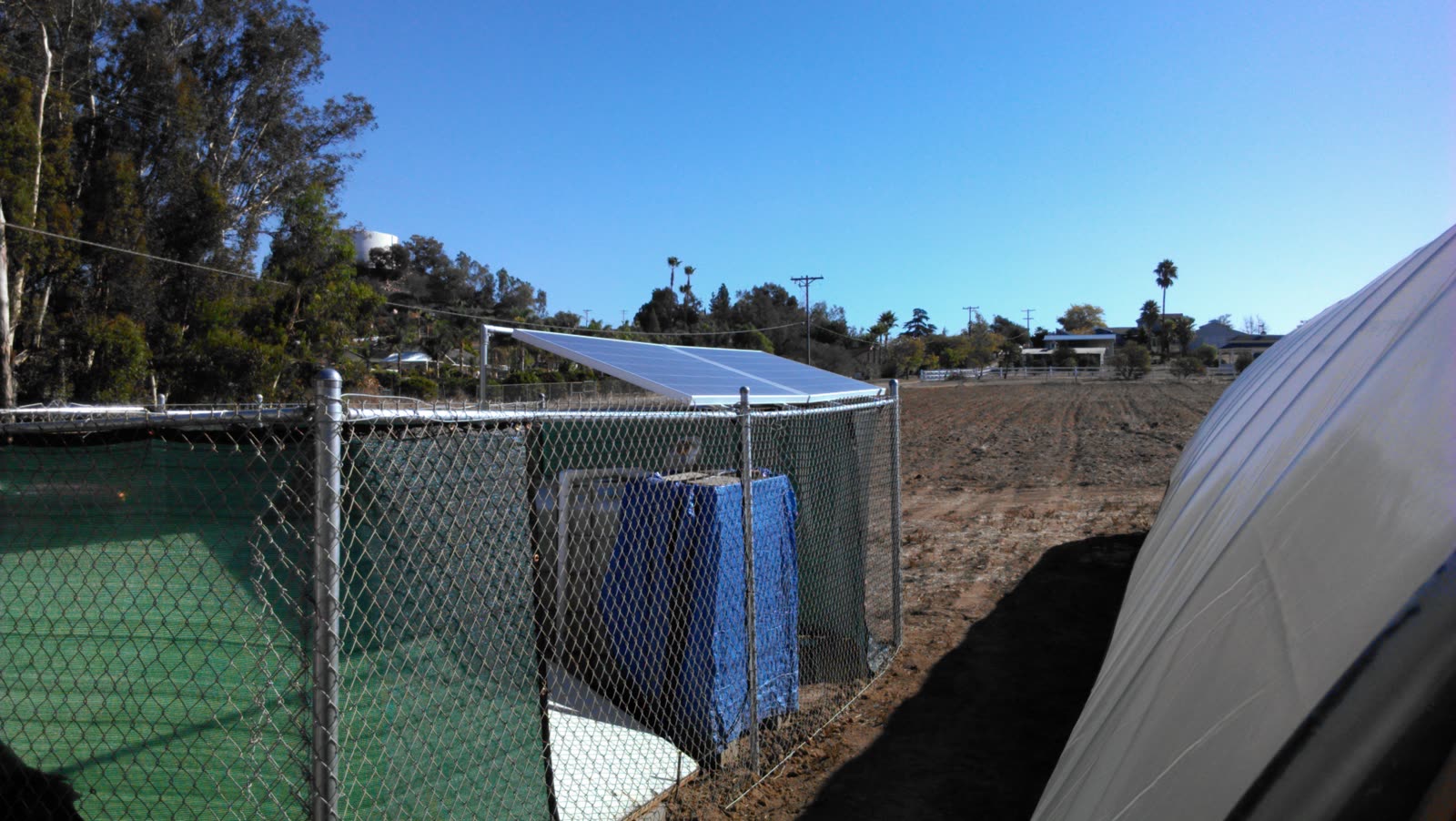
Why this matters to a landowner is simple. Someone who works out the rainwater before building a roof is not going to make up your drainage as they go along. Someone who prices a whole solar system before ordering one panel is not going to leave you with half a project sitting in your field. The habit is the reassurance.
What we would actually want
-
A usable patch of ground
Ideally a few thousand square feet, in or near Fallbrook. It does not have to be flat, pretty, or currently useful.
-
Water, and a way to count it
A meter, or some other way to account for what we use. We read the water every month on the last site and would do it again.
-
A written agreement somebody has actually read
Our 2013 lease came off a template nobody had adapted for California, and it named another state's law entirely. Nothing came of it, but it is exactly the sort of thing we would not do twice.
-
Clarity about what stays
In writing: what gets built, what stays, and what gets removed at the end.
Get in touch
If you have land that fits, or you are just curious what this would look like on your property, write to us. No pitch deck, no pressure. We will show you the numbers and the photographs, and you can decide whether it is worth a conversation.